

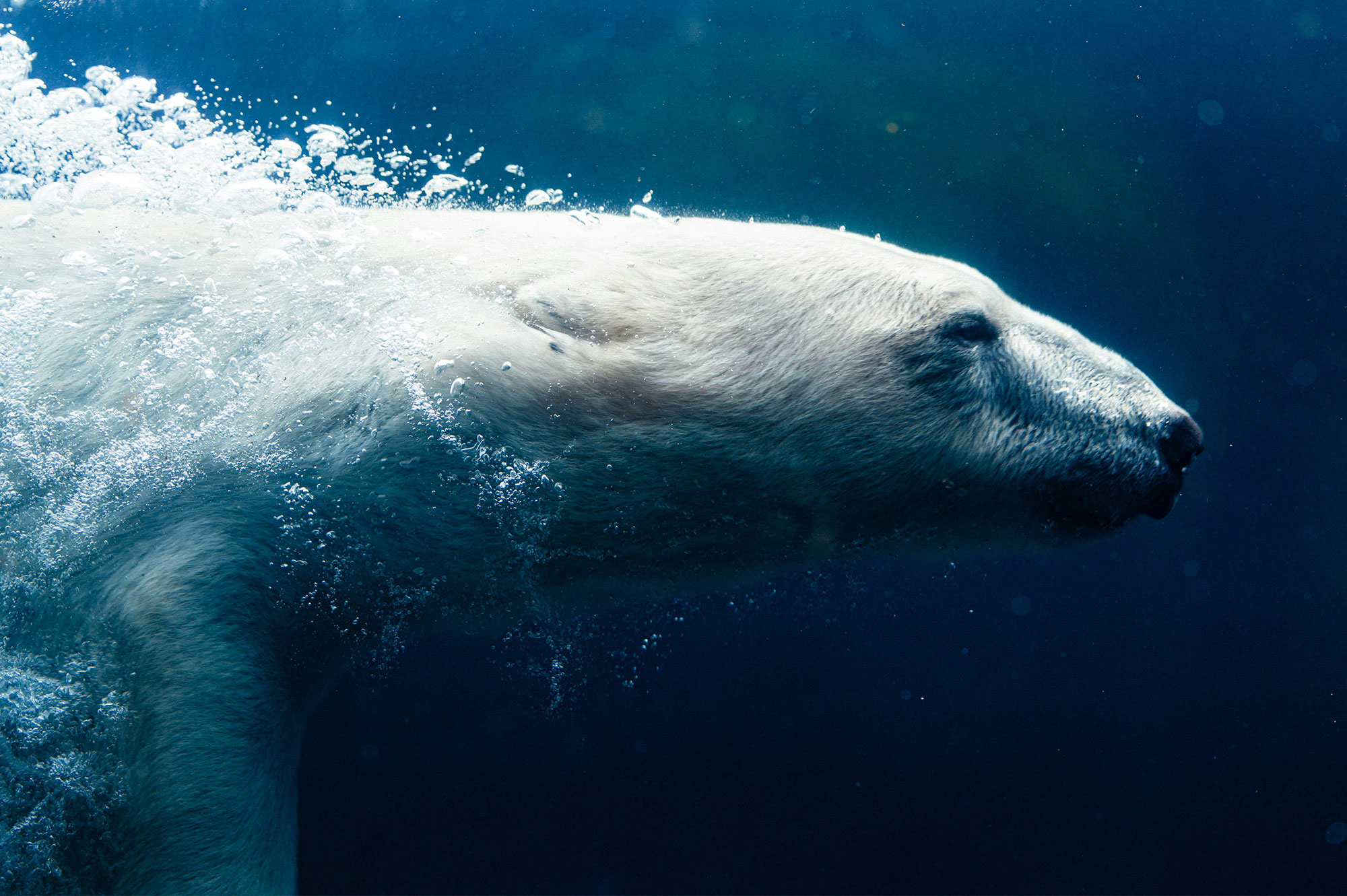
Polar bears in Iceland: a story of climate refugees
We must warn you that the stories we are about to tell you are not pleasant; in fact, they always end badly. Global warming has many consequences, but they do not always involve drought and water shortages. In the Arctic, the opposite is true. Increasingly warm seasons are causing ice to melt and massive influxes of water. Icebergs are drifting into the North Atlantic. They arrive in Iceland and Norway, carrying animals from Greenland and Svalbard.
We decided to tell you the stories of polar bears in Iceland because we experienced one ourselves while working as hiking guides in the Westfjords. This first story, which is personal to us, took place in the Hornstrandir Nature Reserve in 2024.
Polar bears in Iceland: Panic in Hornstrandir in 2024
We are a team of hiking guides and photography guides. We have been working for several years in Iceland’s Westfjords, around the Glacier Drangajökull and in the Hornstrandir Nature Reserve. Every year, from June to October, we criss-cross this magnificent region with groups of hikers or photographers. We used to improvise. When you go to such remote areas with such extreme conditions, you have to be ready to improvise and adapt. But on 19 September 2024, we didn’t expect what was about to happen!
During the autumn, from late August to early October, we run three 12-day self-guided hikes in the Hornstrandir Nature Reserve. Samy guided the first trek and returned. Our colleague Urip was with another group in the reserve for the second trek. During this second trek, we decided to go on a little trip together (Samy and Lilla) to the Westfjords. When we arrived in the east of the region, near Djúpavík, we saw a huge and magnificent glacier.
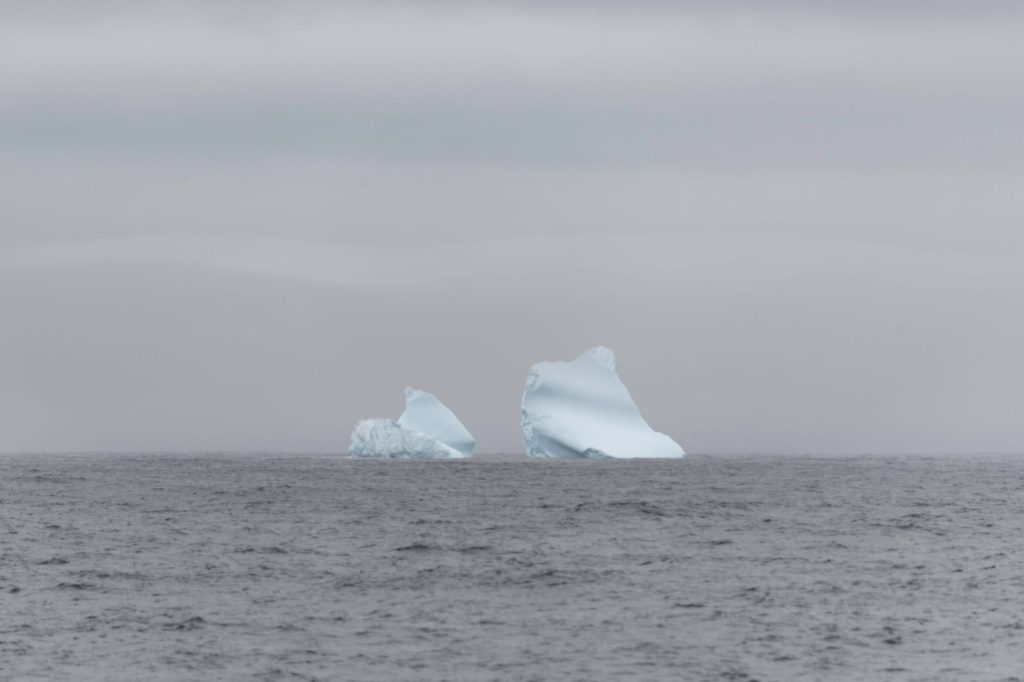
Back in Ísafjörður, where we are staying, we sent the photo of the glacier to Urip with the comment: ‘Iceberg in Djúpavík, we hope for your sake there are no polar bears on board’.
Obviously, it was a joke, because the probability of there being one is very, very low. But what was supposed to be a joke became reality just two hours later, when the Icelandic police issued a polar bear alert in Hornstrandir!
What followed was a flurry of activity at the office to ensure that the group was not in any danger. We first located the group using Garmin (satellite GPS). Then we checked the wind direction in relation to the polar bear’s position, and it turned out to be favourable for our group. Even though the bear was only 10 km away from them, it could not make visual or olfactory contact with them.
Finally, we located the police boat and helicopter that were on their way to the bear’s position and monitored the operations.
We warned you, these stories always end badly. Unfortunately, as is always the case in Iceland, the bear was shot. The reasons given are Greenland’s refusal to take back stray bears for fear of viruses or bacteria not present in the country. But the reality is also financial: repatriating a polar bear costs a lot of money, and no one wants to pay.
The polar bear’s location was the exact spot where we start our hikes in Hornstrandir. We now monitor the situation during each hike, and our guides are equipped with scare devices. In 2025, another bear was photographed on an iceberg 80 km off the coast of Hornstrandir. We will monitor the situation in the coming years to see if these rare occurrences become more frequent with global warming.
The history of polar bears in Iceland
We are telling you this story because Icelandic archives are full of similar events. Many polar bears have visited Iceland, sometimes venturing into isolated villages or farms. If you are travelling to Iceland in winter, bear in mind that polar bears only arrive on the island in summer, after the ice has melted. It is rare for such events to occur in winter.
The Haelavik Bay
Haelavik Cove is located north of the Hornstrandir Nature Reserve. This cove consists of two smaller bays, Rekavik and Hlöðuvík. The famous Hornvik Bay is located a few kilometres to the east.
Haelavik Cove is known for its many stories of polar bears. But the most dramatic comes from the Icelandic sagas, which tell the story of a polar bear that landed on the shores of Hornstrandir. At the time, there was a farm in Haelavik Cove. The polar bear, no doubt starving after drifting on an iceberg from Greenland, attacked the farm’s inhabitants, killing eight people. This event left a lasting impression on the inhabitants of the Strandir region.
Haelavik Cove has been an important place in the history of polar bears in Iceland since the Middle Ages. Much more recently, on 2 May 2011, a fisherman reported briefly seeing a polar bear in the area. The bear fled and disappeared into the fog. The authorities dispatched a helicopter, which eventually spotted and, unfortunately, shot the bear.
The polar bear at Hvalnes Farm
On 16 July 2016, a polar bear was spotted by Egill Bjarnason near the Hvalnes farm in the north of the country. Egill, who was out riding an Icelandic horse, quickly alerted the authorities, who warned the surrounding farms before sending a sniper to the scene. Residents were asked to stay indoors until the operation was complete.
It took less than two hours from the time Egill Bjarnason spotted the bear to the time it was shot dead by sniper Jón Sigurjónsson with a bullet to the heart. The situation was considered very dangerous given the bear’s proximity to farms and the ocean, which could have served as a temporary refuge.
The polar bear that swam 320 km to Iceland
This story of a polar bear in Iceland caused quite a stir in 2008. A series of mistakes angered animal rights activists and part of the Icelandic population.
The bear, which had swum approximately 320 km from the coast of Greenland, was spotted on 3 June 2008 in the Keldudalur valley by a farmer. The farmer quickly alerted the police, who responded immediately. Police Commissioner Stefán Vagn Stefánsson decided to shoot the bear, believing it to be an immediate danger.
Controversy arose over the police commissioner’s argument that a tranquiliser, which would have put the bear to sleep, would have taken 24 hours to arrive on the scene. However, a veterinarian in Blönduós claimed to have the product in question, which could have been delivered within an hour.
Furthermore, the police failed to secure the area by closing the roads. Within a few dozen minutes, a crowd of onlookers had gathered around the area, making the situation dangerous and impossible to manage without shooting the bear.
This episode involving a polar bear in Iceland is one of the most memorable, as the population was so opposed to its killing.
The polar bear of Þistilfjörður
On 27 January 2010, Svanhvít Geirsdóttir, a farmer from Sævarland, had the incredible surprise of finding herself a few metres away from a young polar bear, before running to take refuge in her attic. Svanhvít alerted the authorities, who immediately began searching for the bear, without success.
A few hours later, the polar bear was spotted at the Ósland farm, a few kilometres from Svanhvít Geirsdóttir’s farm. The farmer, fearing for his sheep, shot the bear.
That same year, a second polar bear was shot in the same area.
The Tale of Auðunn of the Westfjords
Iceland is a land of tales and legends, and when you visit the island, you quickly understand why. The landscapes, climate and numerous geological curiosities have inspired women and men to create stories for young and old alike. So we couldn’t talk about polar bears in Iceland without telling you the story of Auðunn from the Westfjords.
Auðunn was a farmer from the western fjords who worked for his cousin Þorsteinn and cherished his mother, whom he cared for, above all else. But Auðunn no longer wanted his life of poverty in Iceland. So one day, he decided to work on a ship in exchange for passage to Scandinavia. But before setting sail, he worked for several years to ensure that his mother would have enough to live on during his absence.
Auðunn worked on a ship for three years, and he was happy with his life. But one day, while he was in Greenland, he had the idea of trading everything he had for a polar bear. No one understood his decision, but he had a plan in mind: to give the polar bear to Svein, the King of Denmark.
After buying the polar bear, Auðunn set sail for Norway. But there was a problem: Harald Hardrada, the King of Norway, was not going to appreciate him giving a polar bear to his sworn enemy, Svein, the King of Denmark.
Upon arriving in Norway, and despite his attempts to remain discreet, Auðunn was summoned by Harald, the King of Norway. The latter, having heard about an Icelander who owned a bear, asked him to sell him the animal. Auðunn refused, but the king doubled the price, without success.
Auðunn stubbornly refuses to sell the bear. Intrigued, King Harald asks him to go to Denmark and offer the bear to King Svein, but on condition that he returns to Norway to report on the Danish king’s reaction to the animal. Auðunn agrees.
Upon arriving in Denmark, Auðunn encountered financial difficulties and could no longer afford to buy food. He began begging for food for himself and his polar bear. A man named Aki took pity on him and offered him food, but on one condition: that Auðunn share ownership of the bear with him. Auðunn had no choice but to accept.
It turned out that Aki was King Svein’s steward. The two of them went to see King Svein of Denmark. The king welcomed them, but when he realised what Aki had done, he became angry with him and banished him from Denmark.
Auðunn lived in Denmark for a while before growing weary of it. He then decided to go on a pilgrimage to Rome. There, he fell ill, lost a lot of weight and all his hair. He became unrecognisable and was forced to beg to survive.
When Auðunn returned to Denmark, marked by his illness, no one recognised him. Ashamed to present himself to King Svein in his condition, he began to lurk around the king’s reception. But the king eventually noticed him and summoned him. He did not recognise him immediately, but when he realised it was Auðunn, he offered him food, care, new clothes and lodging.
Time passed, and the day finally came when Auðunn decided to return to Iceland to care for his mother. He announced this to the king, who, to support him, offered him a fully stocked ship. He also gave him money and a bracelet to prove that he had met the king of Denmark and that the latter held him in high esteem.
Before travelling to Iceland, Auðunn made a short detour to Norway to greet King Harald and tell him about his adventures with King Svein. Harald, impressed by Auðunn’s story, offered him significant rewards.
Auðunn finally returned to Iceland, his pockets full and in good health, to take care of his mother and reunite with his family. After all these years, he had become a wealthy man known for having met the kings of Norway and Denmark.
This story shows the great value placed on the majestic polar bear in Scandinavian and Icelandic folklore. It also conveys the idea that with boldness, one can go far, meet powerful people and achieve great things.
How should you react if you encounter a polar bear in Iceland?
It is not common to see polar bears in Iceland. However, although the last century saw a slowdown in arrivals, the frequency has recently increased.
With global warming accelerating the melting of glaciers, we are likely to see a resurgence of this phenomenon, which could have dramatic consequences for this magnificent animal, which, it should be remembered, is a protected species. More and more polar bears will certainly drift on icebergs and arrive in Iceland.
If you spot a polar bear during a wildlife watching trip in Iceland, be aware that this animal is extremely dangerous to humans, especially after crossing from Greenland. This is because the bear has no opportunity to feed during its journey. And when they arrive on land, only seabirds such as puffins are available as prey, which is a meagre haul for such an imposing animal.
You must therefore adopt the correct behaviour, which consists of a few reflex actions:
- In all cases, you must remain calm and avoid panicking.
- Identify the direction of the wind: if the polar bear is in front of you and the wind is blowing towards you, it cannot smell you. In this case, you can try to crouch down to hide your silhouette and move away discreetly.
- If you observe the bear from a distance, then you must identify the nearest shelter available to you (house, shed, church, etc.) and head towards it.
- You must not run, even if the polar bear seems far away. This animal runs very fast, and if it spots you running, there is a good chance it will quickly head towards you.
- If you have food with you, you should quickly put it on the ground and move away from it.
- If the animal has spotted you and is approaching, your best chance is to scare it away. Once the bear is close, you should increase your body size (by spreading your arms, for example) and use anything that can make noise: shouting, whistling, etc. Sometimes bears get scared and leave.
- Finally, once you are safe, you should notify the Icelandic authorities, as other people may be at risk and you need to act quickly.
As a reminder, polar bears in Iceland mainly land in the Westfjords and northern regions. The most risky areas are Húnaflói Bay, the east coast of Strandir, and northern Hornstrandir (Hornvik and Haelavik). These areas are isolated, and few humans venture there, which increases the risk of such an encounter.
Finally, it is sad to see all these polar bears arriving in Iceland with no other prospect than being shot. What is even sadder is that the main reason preventing the Icelandic authorities from repatriating these animals to Greenland is the cost of the operation. Protests by animal welfare organisations have so far been unsuccessful. Let us hope that polar bears will have a brighter future in Iceland and elsewhere in the Arctic.